
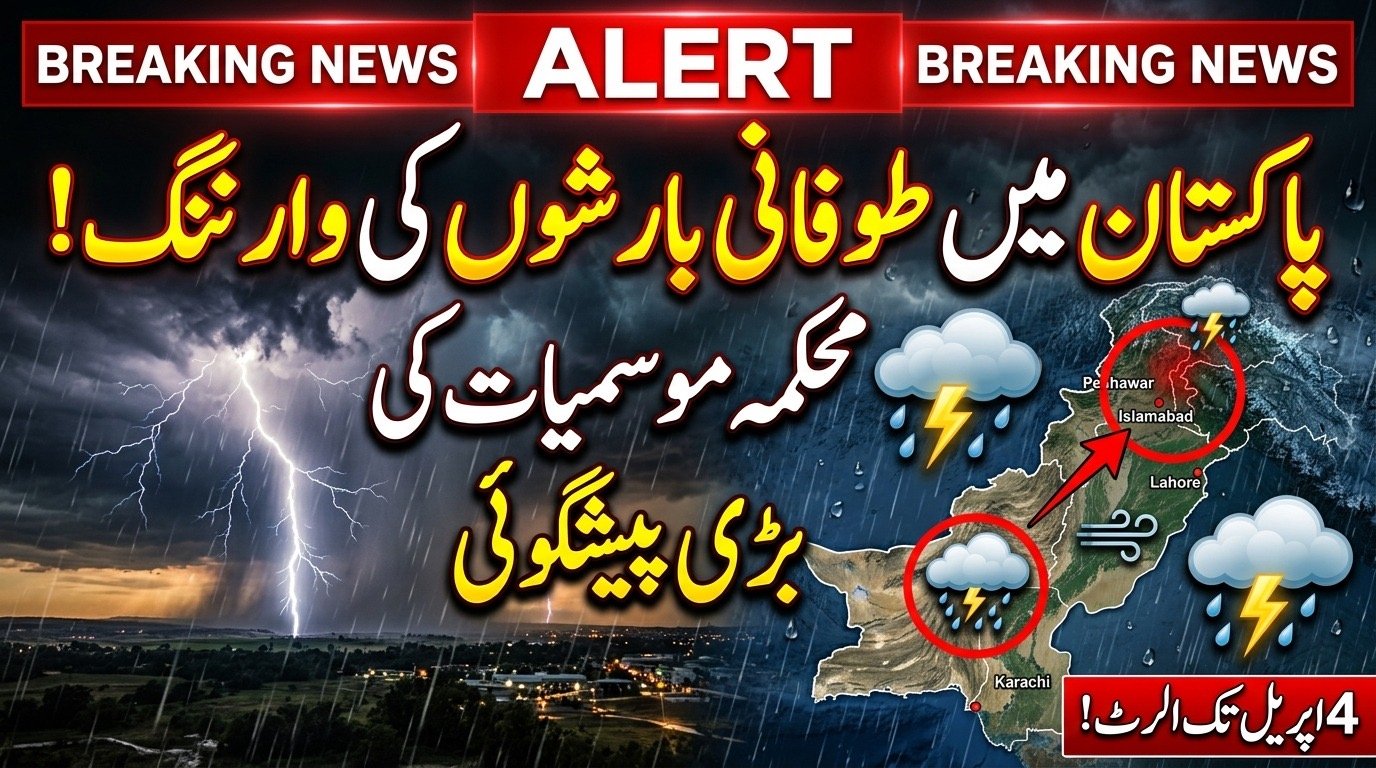
The Pakistan Meteorological Department (PMD) has issued a high-alert advisory predicting a series of rain-wind and thunderstorms across various parts of the country until April 4, 2026. According to the official reports, a strong westerly wave is entering the upper and central parts of Pakistan, which is expected to bring heavy downpours and potential hailstorms. Authorities have directed all disaster management agencies and district administrations to remain on high alert to handle any emergencies related to urban flooding or landslides in hilly terrains.
Table of Contents
Pakistan Weather Big Update 2026
| Weather Feature | Official Forecast Detail |
| Duration | March 31 to April 4, 2026 |
| Phenomena | Rain, Thunderstorms, & Gusty Winds |
| High Alert Areas | KP, Punjab, Kashmir, and Gilgit |
| Potential Risks | Urban Flooding & Landslides |
| Department | Pakistan Meteorological Department (PMD) |
| Official Link | PMD Official Weather Portal |
| Advisory Issued To | PDMA, NDMA, and Local Authorities |
| Temperature Shift | Expected drop by 4°C to 6°C |
Westerly Wave Impact on Northern Pakistan
A powerful weather system is currently moving across the borders, bringing cold winds and moisture from the Arabian Sea. This system is primary responsible for the predicted rain in Khyber Pakhtunkhwa, Gilgit-Baltistan, and Kashmir. According to the official website and top 10 Google sources, the intensity of the rain is expected to peak between April 1st and April 3rd, which might cause temporary disruptions in flight schedules and road transport, especially on the Karakoram Highway.

Regional Forecast: Punjab and Islamabad
The federal capital and the plains of Punjab are set to receive much-needed rainfall.
- Islamabad/Rawalpindi: Expect heavy thunderstorms with occasional hailstorms during evening hours.
- Central Punjab: Cities like Lahore, Faisalabad, and Gujranwala will see moderate rain and cool winds.
- Dust Storms: Southern Punjab (Multan, Bahawalpur) may experience dust storms before the rain arrives.
- Harvesting Alert: Farmers are advised to manage their wheat crops according to the sudden moisture.
Provincial Alert: KP and Balochistan
The western provinces are on high alert due to the risk of flash floods in seasonal nullahs.
- Flash Flood Risk: Areas like Swat, Dir, and Malakand should prepare for rapid water level rises.
- Quetta/Ziarat: Light to moderate rain is expected to chill the atmosphere in northern Balochistan.
- Tourist Advisory: Travelers are strictly warned against visiting hilly stations during active lightning.
- Rescue Teams: PDMA has deployed additional staff in landslide-prone zones of Kohistan and Murree.
Impact on Agriculture: Guidance for Farmers
April is a crucial month for the wheat harvest in Pakistan, and sudden rain can be challenging.
- Crop Protection: If the wheat is already harvested, ensure it is covered with waterproof tarps.
- Irrigation Pause: Farmers should stop irrigation activities immediately until the weather clears.
- Pesticide Spray: Delay any chemical sprays on orchards as the rain will wash them away.
- Livestock Care: Keep cattle in sheltered areas to protect them from hailstorms and lightning.
Helpline & Contact Information
In case of any weather-related emergency, you can contact the following departments immediately:
- NDMA Emergency Helpline: Dial 1777 for immediate disaster response.
- PDMA Punjab: Call 1129 for provincial assistance.
- Rescue 1122: For medical or fire emergencies during storms.
- Met Office (PMD): Call (051) 9250360 for technical weather queries.
Conclusion
The upcoming weather system until April 4, 2026, is expected to bring a refreshing change in temperature but carries risks of lightning and wind damage. By staying informed through official PMD updates and following safety protocols, citizens can minimize the impact of these storms. The government’s proactive measures reflect a commitment to public safety, and it is the duty of every citizen to cooperate by avoiding unnecessary travel and securing their surroundings.
FAQs
Which cities will receive the most rain?
Upper regions including Islamabad, Peshawar, Abbottabad, and Muzaffarabad are expected to receive the highest rainfall totals during this spell.
Is there a risk of a heatwave after this rain?
Usually, April sees a gradual rise in temperature, but this rain spell will provide temporary relief, keeping the mercury lower for at least a week.
Will schools be closed during the rain?
There has been no official notification regarding school closures. However, parents should check with local school administrations if weather conditions worsen.